
An Evidence-Informed Approach to Naturopathy for PCOS
Polycystic ovary syndrome (PCOS) is a common hormonal and metabolic condition that can affect menstrual cycles, ovulation, androgen levels, skin, weight and metabolic health. PCOS can present differently from one person to another, so management should be individualised according to symptoms, reproductive goals, metabolic risk factors and overall health.
Naturopathy for PCOS focuses on sustainable lifestyle measures such as balanced nutrition, regular physical activity, adequate sleep, stress management and yoga-based practices. These approaches are best considered supportive components of PCOS care, rather than substitutes for appropriate medical evaluation or treatment.
At Nalam Yoga & Naturopathy Clinic, we provide personalised naturopathy, nutrition, yoga therapy and lifestyle guidance based on individual health needs and goals.
What Is PCOS?
PCOS is a complex condition involving reproductive, hormonal and metabolic factors. Despite its name, the presence of ovarian cysts is not required for a diagnosis of PCOS.
Common features may include:
- Irregular or infrequent menstrual periods
- Difficulty with ovulation
- Increased androgen activity
- Acne or oily skin
- Excess facial or body hair
- Hair thinning
- Weight gain or difficulty with weight management
- Insulin resistance or abnormal blood glucose regulation
- Fertility difficulties in some individuals
Not everyone with PCOS experiences all of these symptoms.
How Can Naturopathy Support PCOS Management?
There is no single naturopathy treatment that works for everyone with PCOS. A personalised approach focuses on modifiable lifestyle factors that may influence metabolic health, reproductive health and overall wellbeing.
1. Nutrition
A balanced and sustainable eating pattern can support metabolic health and healthy weight management when weight reduction is appropriate.
A personalised nutrition plan may emphasise:
- Vegetables and leafy greens
- Whole fruits in appropriate portions
- Whole grains and minimally processed carbohydrates
- Pulses, beans and other fibre-rich foods
- Adequate protein
- Nuts and seeds
- Healthy sources of unsaturated fats
- Adequate hydration
Highly restrictive diets and unnecessary food exclusions should generally be avoided unless medically indicated.
2. Physical Activity
Regular physical activity is an important component of PCOS management.
Depending on an individual's fitness level and health status, an exercise programme may include:
- Brisk walking
- Strength or resistance training
- Aerobic exercise
- Mobility exercises
- Yoga
Regular movement can support cardiovascular fitness, metabolic health and overall wellbeing.
3. Yoga Therapy
Yoga therapy may be incorporated into a broader PCOS lifestyle programme.
Depending on individual needs, practices may include:
- Gentle yoga postures
- Mobility exercises
- Breath-awareness practices
- Relaxation techniques
- Meditation or mindfulness
Yoga should complement appropriate medical care rather than replace it. Specific practices and intensity should be modified according to fitness level, injuries, pregnancy and other health considerations.
4. Stress Management
Stress is not considered the sole cause of PCOS, but persistent stress can affect sleep, eating behaviour and overall wellbeing.
Stress-management strategies may include:
- Slow breathing practices
- Guided relaxation
- Meditation
- Mindfulness
- Regular physical activity
- Time outdoors
- Consistent daily routines
5. Sleep and Daily Routine
Adequate and regular sleep is an important part of overall metabolic and physical health.
Helpful habits include:
- Maintaining a consistent sleep and wake schedule
- Getting regular daytime physical activity
- Limiting excessive screen exposure before bedtime
- Creating a comfortable sleep environment
- Seeking professional evaluation for persistent sleep problems
Can Naturopathy Cure PCOS?
It is not appropriate to claim that naturopathy can permanently or completely cure PCOS.
PCOS is a long-term condition, and its symptoms and health risks can change over time. A personalised programme involving nutrition, physical activity, yoga, stress management, sleep and other lifestyle measures may support aspects of PCOS management.
Some individuals may experience improvements in menstrual regularity, metabolic health, weight management or other PCOS-related symptoms, but results vary from person to person.
The goal should be sustainable long-term health improvement rather than promising a permanent cure.
PCOS, Weight Management and Metabolic Health
Some people with PCOS have insulin resistance or increased cardiometabolic risk, while others do not.
When weight reduction is clinically appropriate, even modest and sustainable changes may benefit metabolic and reproductive health. However, body weight is only one part of PCOS management.
A healthy approach should avoid:
- Crash diets
- Extremely low-calorie diets
- Unnecessary prolonged fasting
- Unverified "hormone-balancing" products
- Extreme food restrictions
- Claims that a particular food or therapy can cure PCOS
The emphasis should be on nutritional adequacy, regular physical activity and sustainable lifestyle habits.
PCOS and Fertility
PCOS can interfere with regular ovulation and may contribute to difficulty becoming pregnant. However, having PCOS does not automatically mean infertility.
When pregnancy is desired, assessment may consider:
- Menstrual and ovulation patterns
- Age
- Metabolic health
- Weight where clinically relevant
- Other fertility factors
- Previous pregnancy history
- Partner-related factors where relevant
People trying to conceive should discuss appropriate fertility care with a qualified healthcare professional. Lifestyle measures can support general health, but fertility evaluation should not be unnecessarily delayed when indicated.
How Is PCOS Diagnosed?
PCOS should not be diagnosed solely from symptoms or an online questionnaire.
A healthcare professional may assess:
- Menstrual history
- Signs of androgen excess
- Medical and family history
- Physical examination
- Blood tests when appropriate
- Metabolic health
- Other possible causes of irregular periods or androgen-related symptoms
Several other health conditions can cause similar symptoms. Appropriate clinical evaluation is therefore important before establishing a diagnosis.
Evidence and Limitations
Lifestyle management is an important component of evidence-based PCOS care. Research supports healthy dietary patterns and regular physical activity as useful components of comprehensive PCOS management.
Evidence for individual complementary approaches—including specific naturopathic treatments, herbal preparations and supplements—is more variable. Some interventions have limited or inconsistent evidence.
It is also important to remember that "natural" does not automatically mean safe.
Herbal products and supplements may interact with medicines, and some may not be appropriate during pregnancy or while trying to conceive. They should therefore be considered carefully with a qualified healthcare professional.
When Should You Seek Medical Attention?
Professional medical evaluation is recommended if you experience:
- Persistently irregular or absent periods
- Heavy or unusual bleeding
- New or rapidly increasing facial or body hair
- Significant or sudden hair loss
- Persistent pelvic or abdominal pain
- Difficulty becoming pregnant
- Symptoms suggesting abnormal blood glucose
- Significant unexplained changes in weight
- Severe or concerning symptoms
Seek urgent medical care for emergency symptoms such as fainting, severe abdominal or pelvic pain, difficulty breathing, chest pain, seizures, severe bleeding or other signs of a medical emergency. Do not delay emergency treatment in favour of naturopathy or yoga.
Naturopathy for PCOS in Chennai and Pudupakkam
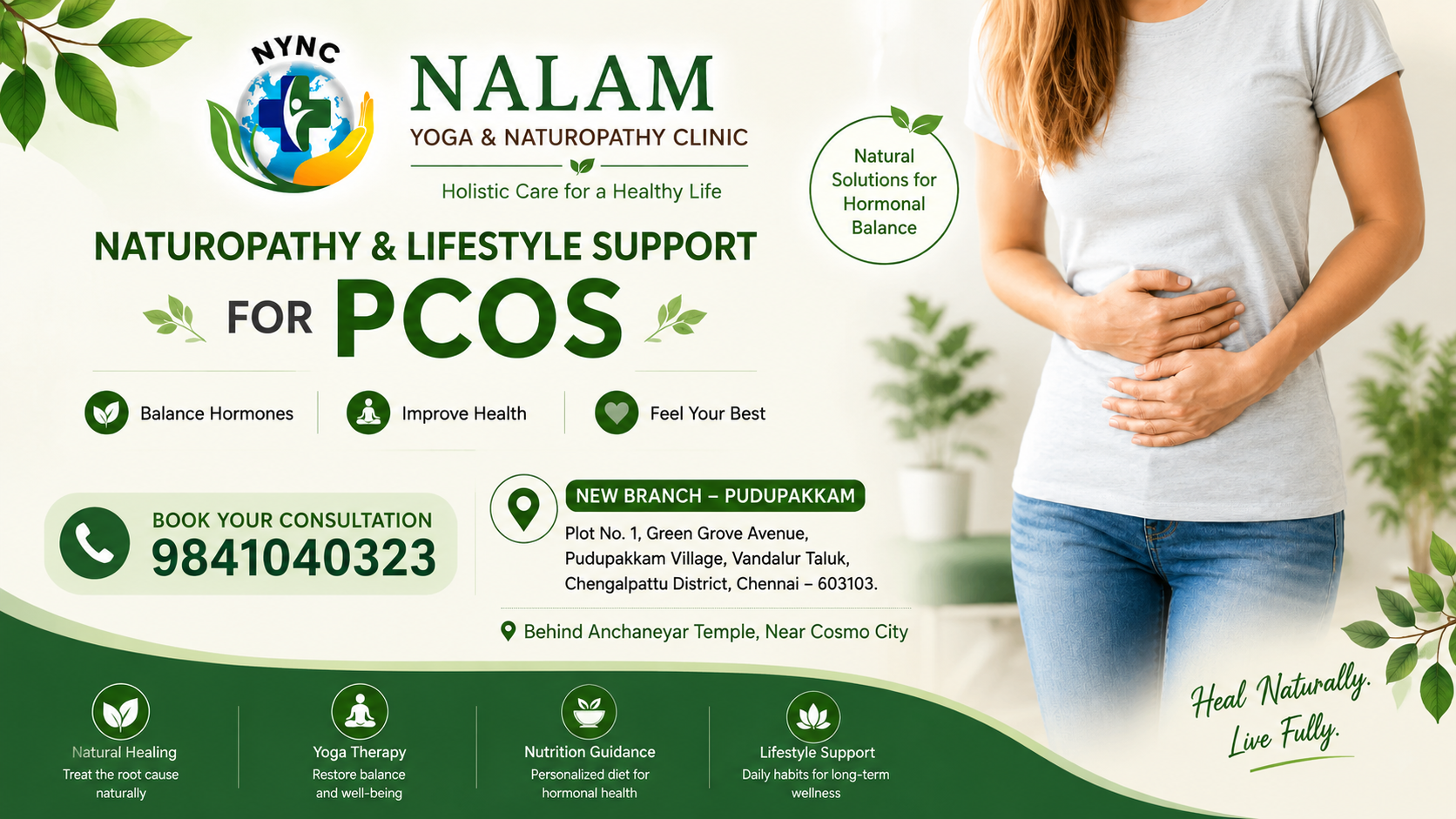
Nalam Yoga & Naturopathy Clinic provides personalised naturopathy, yoga therapy, nutrition and lifestyle guidance for individuals seeking supportive approaches to PCOS management.
Our New Branch – Pudupakkam
We are pleased to introduce our NEW Nalam Yoga & Naturopathy Clinic branch in Pudupakkam, conveniently located near Cosmo City and behind Anchaneyar Temple.
New Branch Address:
Nalam Yoga & Naturopathy Clinic – New Branch
Plot No. 1, Green Grove Avenue,
Pudupakkam Village, Vandalur Taluk,
Chengalpattu District, Chennai – 603103.
Landmark: Behind Anchaneyar Temple, near Cosmo City.
This new branch makes personalised naturopathy and yoga therapy services more accessible to people in Pudupakkam, Kelambakkam, Vandalur and surrounding areas.
A consultation can help determine which nutrition, lifestyle and yoga strategies are appropriate for your individual health needs.
About Dr. Bharani, BNYS
Dr. Bharani, BNYS, is the Founder & Chief Physician of Nalam Yoga & Naturopathy Clinic. His clinical approach focuses on personalised naturopathy, yoga therapy, nutrition and sustainable lifestyle modification.
Visit Our New Pudupakkam Branch
If you are looking for naturopathy treatment for PCOS in Pudupakkam, our new branch provides an opportunity to discuss your individual health concerns with our clinical team.
Nalam Yoga & Naturopathy Clinic – New Pudupakkam Branch
Plot No. 1, Green Grove Avenue, Pudupakkam Village, Vandalur Taluk,
Chengalpattu District, Chennai – 603103.
Landmark: Behind Anchaneyar Temple | Near Cosmo City
If you'd like a personalised naturopathy or yoga therapy plan, consider booking a consultation with Dr. Bharani (BNYS), Founder & Chief Physician at Nalam Yoga & Naturopathy Clinic.
Medical Disclaimer
This information is for educational purposes only and is not a substitute for professional medical advice, diagnosis, or treatment. Every individual has unique health needs. Please consult Dr. Bharani or another qualified healthcare professional before making changes to your treatment, diet, exercise, or lifestyle.