Introduction
Fatty liver disease has become increasingly common and is often associated with metabolic health concerns such as overweight or obesity, insulin resistance, type 2 diabetes, high cholesterol, and high blood pressure.
The good news is that lifestyle changes can play an important role in managing fatty liver. Improving dietary habits, increasing physical activity, achieving gradual weight loss when appropriate, and addressing metabolic risk factors may help reduce liver fat and support overall health.
A naturopathy-based approach focuses on these modifiable lifestyle factors. At Nalam Yoga & Naturopathy Clinic, the approach may include personalized nutrition guidance, physical activity, yoga therapy, stress management, sleep improvement, and sustainable lifestyle modification based on an individual's health status.
What Is Fatty Liver?
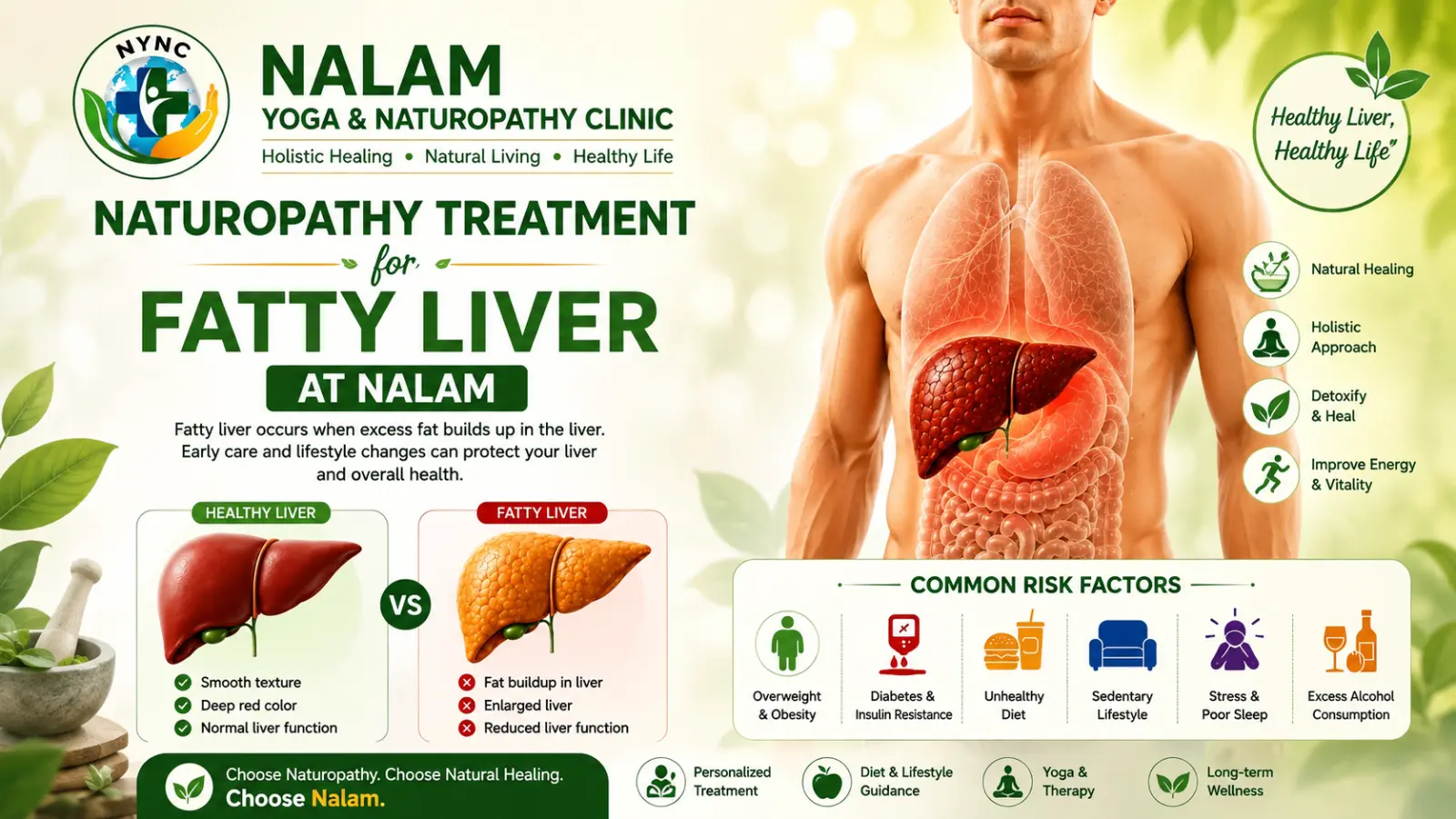
Fatty liver refers to the accumulation of excess fat in the liver.
The medical terminology has evolved in recent years. What was previously commonly called non-alcoholic fatty liver disease (NAFLD) is now increasingly referred to as metabolic dysfunction-associated steatotic liver disease (MASLD) when the condition is associated with metabolic risk factors.
Fat accumulation in the liver does not always cause symptoms. However, in some individuals, the condition may progress from simple fat accumulation to liver inflammation and, over time, fibrosis or cirrhosis.
This is why early assessment and long-term lifestyle management are important.
Lifestyle measures such as healthy eating, gradual weight management, and regular physical activity are important components of care. Evidence from the National Institute of Diabetes and Digestive and Kidney Diseases (NIDDK) indicates that weight loss in people with overweight or obesity can reduce liver fat, and greater weight loss may be associated with improvements in liver inflammation and fibrosis. Physical activity can also provide benefits even when significant weight loss does not occur.
Types of Fatty Liver Disease
Fatty liver can have different causes.
1. Metabolic Dysfunction-Associated Steatitis Liver Disease (MASLD)
MASLD is associated with metabolic risk factors such as:
- Overweight or obesity
- Insulin resistance
- Type 2 diabetes
- High blood pressure
- Abnormal cholesterol or triglyceride levels
- Physical inactivity
- Unhealthy dietary patterns
2. Alcohol-Associated Liver Disease
Excessive alcohol consumption can contribute to fat accumulation and liver injury.
The management approach is different from MASLD, and people with alcohol-related liver disease should receive appropriate medical assessment and support to stop alcohol consumption safely.
3. Other Causes
Liver fat may also be associated with:
- Certain medications
- Rapid weight loss or malnutrition
- Some metabolic disorders
- Other liver conditions
Therefore, it is important not to assume that every case of fatty liver has the same cause.
What Causes Fatty Liver?
Fatty liver commonly develops when the body has difficulty managing excess energy and metabolic risk factors.
Common contributing factors include:
Excess Body Weight
Insulin Resistance
Unbalanced Diet
Physical Inactivity
Diabetes and Metabolic Conditions
Alcohol Consumption
Symptoms of Fatty Liver
Many people with fatty liver have no noticeable symptoms.
When symptoms occur, they may include:
- Fatigue
- General weakness
- A feeling of discomfort in the upper right abdomen
- Reduced energy
- Symptoms related to associated metabolic conditions
Can Naturopathy Help with Fatty Liver?
Naturopathy does not have a single treatment that can be considered a guaranteed cure for fatty liver.
Instead, a naturopathy-based approach may focus on improving the lifestyle factors that contribute to metabolic health.
This may include:
- Personalised nutrition
- Gradual weight management
- Regular physical activity
- Yoga therapy
- Stress reduction
- Adequate sleep
- Better hydration
- Healthy daily routines
- Monitoring of metabolic risk factors
The strongest evidence for lifestyle-based management of fatty liver relates to sustainable improvements in diet, physical activity, and weight management rather than to a specific herbal or "detox" therapy. NIDDK guidance notes that gradual weight loss, healthy food choices, portion control, and physical activity can improve fatty liver in appropriate individuals.
A personalized naturopathy plan should therefore complement—not replace—medical evaluation and monitoring.
Diet for Fatty Liver
There is no single "fatty liver diet" that works for everyone.
A practical dietary pattern should be nutritionally balanced, sustainable, and adapted to individual metabolic and medical needs.
Is Fruit Safe for Fatty Liver?
For most people, whole fruit can be part of a balanced diet.
Whole fruits provide fibre and nutrients and are generally preferable to fruit juices or sugar-sweetened beverages.
However, people with diabetes or other metabolic conditions may need individual guidance regarding portions and overall carbohydrate intake.
How Long Does It Take to Improve Fatty Liver?
The timeline varies considerably.
Factors that may influence progress include:
- Starting body weight
- Diet quality
- Physical activity
- Blood glucose control
- Cholesterol and triglyceride levels
- Alcohol consumption
- Medication use
- Genetic factors
- Severity of liver disease
- Presence of liver fibrosis
Some people may see improvements in metabolic markers relatively quickly, while changes in liver fat and fibrosis may take longer.
The most important goal is to establish sustainable habits rather than expect rapid results.
Regular follow-up with a healthcare professional can help monitor progress.
Naturopathy for Fatty Liver at Nalam Yoga & Naturopathy Clinic
At Nalam Yoga & Naturopathy Clinic in Perumbakkam, Chennai, a personalized lifestyle-based approach may be considered for individuals seeking support with fatty liver and related metabolic health concerns.
Depending on the individual's health profile, the program may focus on:
- Personalized nutrition guidance
- Sustainable weight management
- Yoga therapy
- Physical activity
- Stress management
- Sleep and daily routine
- Healthy lifestyle education
- Monitoring and coordination with appropriate medical care
The approach should be individualized based on age, body composition, metabolic health, existing medical conditions, medications, lifestyle habits, and relevant investigations.
If you'd like a personalized naturopathy or yoga therapy plan, consider booking a consultation with Dr. Bharani (BNYS), Founder & Chief Physician at Nalam Yoga & Naturopathy Clinic, Perumbakkam, Chennai.
Conclusion
Fatty liver is increasingly recognized as a metabolic health condition that benefits from long-term lifestyle management.
Naturopathy can contribute to a holistic care approach by supporting healthy nutrition, gradual weight management, physical activity, yoga therapy, stress reduction, adequate sleep, and sustainable daily habits.
However, fatty liver should not be treated with unproven detox programs or self-prescribed herbal supplements. Proper medical assessment is essential to understand the cause and severity of liver disease and to identify the presence of fibrosis or other complications.
The most effective approach is often a personalized and sustainable one—combining evidence-informed lifestyle changes with appropriate medical monitoring.
About Dr. Bharani, BNYS
Dr. Bharani is the Founder & Chief Physician of Nalam Yoga & Naturopathy Clinic, Perumbakkam, Chennai, with more than 18 years of clinical experience in natural healthcare and holistic wellness.
He specializes in personalized naturopathy treatments, yoga therapy, clinical nutrition, lifestyle modification, and preventive healthcare. His patient-centered approach focuses on identifying the root cause of health concerns and restoring the body's natural healing ability through evidence-based natural therapies.
Dr. Bharani is committed to helping individuals achieve long-term health and well-being by combining traditional naturopathy principles with modern scientific knowledge. His mission is to empower patients to lead healthier, happier, and disease-free lives through sustainable lifestyle changes.
Medical Disclaimer
Disclaimer: This information is for educational purposes only and is not a substitute for professional medical advice, diagnosis, or treatment. Every individual has unique health needs. Please consult Dr. Bharani or another qualified healthcare professional before making changes to your treatment, diet, exercise, or lifestyle.